Damian Toohey | My ABI Journey
August 11, 2026
5 years on, I am still learning new aspects about my experience of a brain injury and my journey to date.
There are so many terms used in relation to my brain injury, it is fatiguing enough just to comprehend the magnitude of the experience, let alone, what each of these entail.
Associated with my event are terms such as Thunderclap Headache, Brain Bleed, Stroke, DAVF (dural arteriovenous fistula) AVM (arteriovenous malformation), Craniotomy (Craniectomy), Tracheostomy, Cerebral Angiogram, Endovascular Embolization, trauma, coma, nasogastric feeding tube, catheter, cannula, isolation, blood pressure, injections and the pandemic are not just words, they are a lived experience, and that’s before you consider recovery. Now, I find that I need to add another term, Acquired Brain Injury (ABI).
Simply put, that is a lot to take in even if your brain hasn’t been messed up in the process. To be honest, I generally find that people can’t absorb those terms into a singular experience so I try now to gravitate towards the graphical - because, “a picture is worth a 1000 words”.
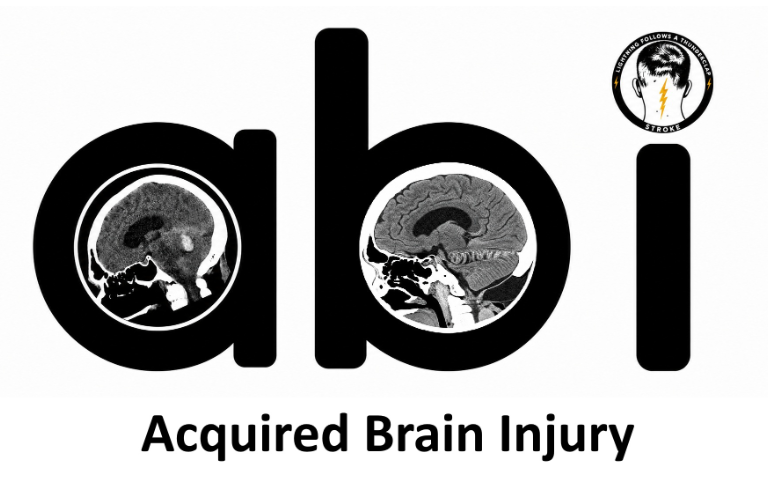
The abi image is just a graphical representation of my journey to date. From the brain bleed as shown in the “a” to the post-bleed reality of the “b” where part of my skull was removed and a putty-like substance was used at the source (in a process called endovascular embolization) to the person “i” am today.
So literally, I am someone left with “rocks in my head” and I can smile about it because it is better than some of the other outcomes - because when you look death in the eye, it changes you.
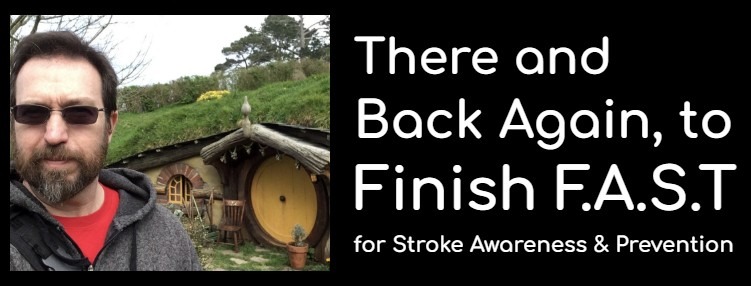
Life for my family and I changed on the Friday 16th July 2021, when sometime during the morning I suffered a thunderclap headache which I took to be a migraine. I collapsed into bed and it was later that afternoon, after collapsing on the bathroom floor after a bout of vomiting that an ambulance was called.
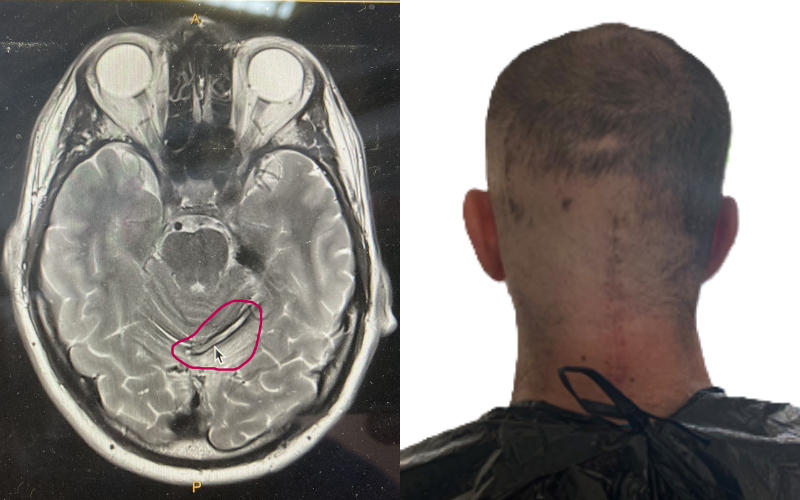
What I didn’t know and no one picked up at the time was that I had suffered a haemorrhagic stroke, a plumbing issue with the brain. When people typically think about stroke, it is typically associated with a clot that essentially blocks a pipe or pipes within the brain that derives an area of the brain of life-giving oxygen (clots can be treated with medication). In my case, I had a leak (which is also a stroke) and when something leaks into a confirmed space such as a skull cavity, it creates pressure and has an impact on the surroundings. From what I understand, the mortality rates for leaks are worse than those of a blockage.
From what I can establish, I essentially bled into my brain for the time before the ambulance arrived, then bled into my brain while I bum-shuffled down the 16 steps to get to the lower floor of the house (when you fall sick on an upper floor of a house, it does create challenges when help is needed), I continued bleeding in the ambulance to a local hospital and then continued bleeding while I waited to be seen and examined. A MRI occurred around 7:50pm that night and I imagine it a someone going “Oh S**t”, because I was put back into an ambulance with a doctor and rushed to a hospital 40km away to undergo emergency surgery.
One part of that surgery was that the back of my skull was cut open to relieve pressure, leaving a large scar which I now represent with the lightning bolt in the image.
I had a high-to-low pressure short circuit within the plumbing of my brain which resulted in a leak.
When it came to fixing the leak, I underwent a number of cerebral angiograms to identify and fix some of the “pipes” in my brain via a process endovascular embolization (plugging the leak with glue or coils through the catheter). For these procedures, I was unconscious, but I was awake during a follow up procedure, months after the event which is an experience that is not easily described in words. The thought of having something snake through your entire body into your head takes a bit of getting used to.
Sometime over the 3 days it took to perform the surgery and undertake the procedures (with some issues due to the pandemic because of a suspected case that impacted staffing), I developed a complication resulting in pneumonia. This meant that I needed a tracheostomy, in other words my throat was slit and a tube inserted and I was hooked up to a machine to help me breathe.
Given the extent of my stroke, I spent two weeks in a coma under intensive care, which ironically is how I spent Melbourne’s lockdown number 5. While I lay in a coma fighting for my life, my wife and children had the unpleasant experience of not being able to see me or being by my side. In fact, my wife was told that “they would only be able to see me for end-of-life”. So, in some perverse sort of way, not being asked to see me meant that I was still alive and fighting.
Now ask yourself, “How would you feel if that was my loved one in that position”.
If anyone wants to know what the impact of a brain injury has on the family, ask yourself that question and you will have your answer.
It is sufficient to say that the mental health impact on my family was significant and it would have significant impacts afterwards, but that is not my story to tell and people often forget, no event happens in isolation.
From my perspective, I woke from my coma amongst strangers, unable to speak, to find that my family had been denied access. If you have read any other of these stories, you may note that they sometimes include photos of that time with their loved one in hospital. Unfortunately, you will not find that here because that opportunity was denied and I was left trying to nonverbally communicate with anyone familiar with me. I was given a whiteboard which if you have read anything about brain injuries, is really difficult to use as some stroke patients have described taking up to 4 years just to be able to write again.
I was in no doubt that I was faced with the challenge of my life, the question was "Will I lay down and die, or will I get up and fight?" I chose to fight.
Let me summarise that time in hospital after awakening as being (in hindsight) rather unpleasant but strangely at the time, there was a feeling of just being happy to be alive. This part of my journey has been sometimes more confronting to others as they realise all the activities that went on during this time. For instance, I had tubes everywhere, I was hooked up to so many things from pumps on my legs (that I really hated) to prevent DVT (Deep Vein Thrombosis), monitors, some bags of medication/fluids being injected into a vein in the arm, a feeding tube through the nose, some additional drains sewn into my head and the ventilator attached to my tracheostomy. Add to that constant injections and what many people don’t realise about tracheostomies is that they require regular vacuuming to remove secretions.
The whole experience is so exposing, confronting and isolating, partly because the whole process of becoming conscious again brings with it some realisation of where the pains are coming from. Even during rehabilitation, the common room where people recovering might meet others was closed due to the pandemic.
In total, I spent 32 days across two hospitals without physical access to my loved ones before I was discharged. Even discharge was a challenge, as my wife essentially said she wouldn’t pick me up unless they let her in to have a proper handover briefing, which lasted about an hour.
Luckily for me, I was physically active prior to my stroke, as my wife and I were regularly having fitness sessions with a personal trainer when the restrictions permitted and I was walking regularly. Ironically, I had a session the night before my stroke.
One thing that I need to make very clear to anyone who experiences such an event, “You will never be the same person you were before the event”. The very nature of the experience will change you so don’t let that inhibit your recovery.
Be the best you can be, take that extra little step every single day and never stop fighting. Fundamentally, a brain injury is change and how a person deals with change, will influence their journey to recovery. Recovery is not about getting back to how you were, it is about growth and development. It is about accepting the "new you", the person that has experienced the trauma of a brain injury and survived. It is an opportunity for growth, learning and assessing current limitations. Set a plan and work on overcoming or adapting to those limitations.
Be determined, be creative and never, ever give up.
Inspire the others that follow. Set a path and pursue it with passion. Celebrate the milestones and learn from the negatives. Like all journeys, there will be ups and there will be downs, but the goal is to keep moving forward. Take a rest when needed and don’t forget to smell the roses along the way because fundamentally, your journey to recovery is essentially life.
Yes, life. If you are feeling down or overwhelmed, remember that you lived, there are plenty of others that didn’t. To be honest, recovery won’t be easy
After 5 years of fighting the good fight, the best piece of advice I can give is to find your community. For me, it is parkrun. There is healing power in the phrase - Parkwalk, Parktalk, Parkfun, Parkrun. A great way to meet people and build community is to volunteer or to chat to others during a walk/run. Parkrun is more than a 5k walk/run, it is a journey like recovery. Not every walk/run is a PB (Personal Best Time), it is about dedication and perseverance. Sometimes, it is about helping others or them helping you to complete a simple goal, such as completing the distance non-stop.
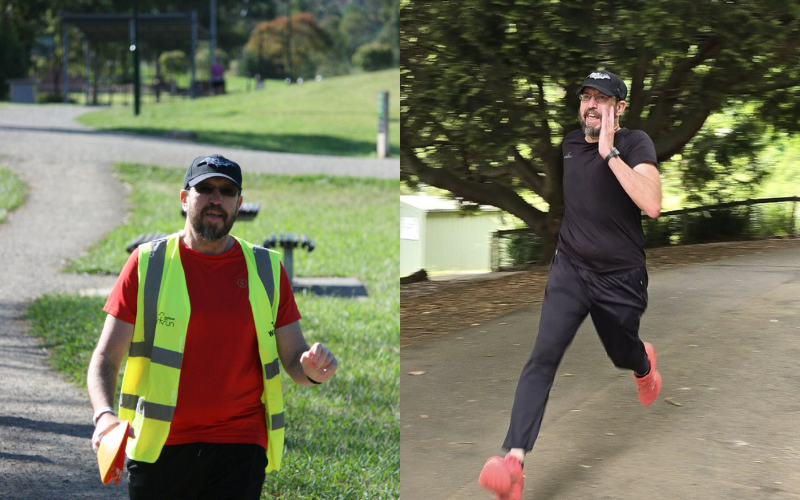
To celebrate my 100th parkrun after stroke milestone, I made a note of it on my milestone shirt. The great thing about this is that it is a conversation starter, something that has helped raise the awareness of stroke, and for some, it is inspirational.
One of the things that I love most about when I go running is that I always like to finish F.A.S.T - promoting the signs of stroke through action. Some people get it, some people don't, some take a while but that's life. Yes, life. I am thankful that I survived because 1 in 6 experiencing stroke don't. So saviour life while you have it, don't let fear hold you back.
Speaking of journeys, here are some Tolkien quotes that I found helpful.. - ‘All we have to decide is what to do with the time that is given us’ – Gandalf - ‘Not all those who wander are lost’ – Bilbo - ‘Faithless is he that says farewell when the road darkens’ – Gimli
So far on my journey, I have mainly focused on stroke and promoting the signs of stroke - both B.E.-F.A.S.T. (Balance, Eyes, Face, Arms, Speech, Time) and F.A.S.T. I have asked why F.A.S.T is preferred and I understand the reasons and the data behind that reasoning but as someone who may have been served by the B.E (Balance, Eyes), I’ll keep mentioning it.
Speaking of journeys, here are some Tolkien quotes that I found helpful.. - ‘All we have to decide is what to do with the time that is given us’ – Gandalf - ‘Not all those who wander are lost’ – Bilbo - ‘Faithless is he that says farewell when the road darkens’ – Gimli
So far on my journey, I have mainly focused on stroke and promoting the signs of stroke - both B.E.-F.A.S.T. (Balance, Eyes, Face, Arms, Speech, Time) and F.A.S.T. I have asked why F.A.S.T is preferred and I understand the reasons and the data behind that reasoning but as someone who may have been served by the B.E (Balance, Eyes), I’ll keep mentioning it.
As I continue on my journey, I would like to point out that learning the FAST or BE-FAST signs is not just about stroke, these signs can also act as warning signs of trauma, infection or structural damage to the brain, such as concussions and TBIs. Brain injuries are serious and TIME is the most critical factor, no matter the label.
Open yourself to the wider world and understand that like the house you live in, there are other areas to consider, not just the blockages and leaks in the plumbing.
Damian Toohey
Stroke Survivor
Are you a person impacted by Brain Injury?
Access our services
Whether you are a person living with a brain injury, a caregiver supporting a family member or friend, we can assist you.