Paul Jamieson's Story | Rebuilding Life after Brain Injury
April 20, 2026
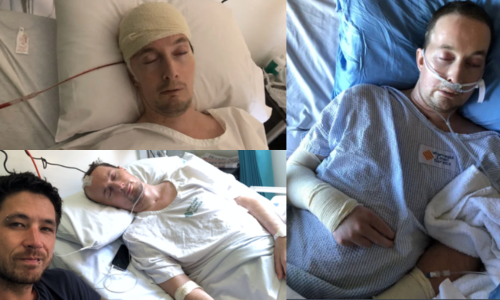
In 2017, Paul acquired a Traumatic Brain Injury, resulting from a wakeboarding accident at Lake Eildon. Immediately following the accident Paul felt fine chatting with his friends, but confusion and loss of consciousness soon followed as the situation rapidly escalated. He was rushed to hospital, where doctors discovered a life-threatening brain bleed. Emergency surgery followed, with surgeons drilling into his skull to relieve the pressure and save his life. Doctors told Paul’s family to prepare for the worst with a prognosis that he may not make it.
That moment marked the beginning of a long and uncertain journey.
Facing the Unknown
In the early stages of recovery, Paul’s condition was critical. Doctors delivered devastating news to his family, suggesting he may never regain independence and would likely require long-term care. But his family refused to accept that outcome.
Despite the medical outlook, there were small but powerful signs of hope. One moment stands out — when Paul’s partner held his hand, and he managed to squeeze it back.
“That was how I knew I was still there,” he says.
“They didn’t give up on me,” Paul reflects. “They believed I could recover, even when things looked impossible.”
Paul Jamieson
The Beginning of Recovery
When Paul first met his Occupational Therapist Caitlin, he was in hospital, lying in bed and unable to move, talk, eat or open his eyes. Paul's only way of communicating was by squeezing her hand.
Paul’s turning point came when he moved into supported accommodation, where his rehabilitation truly began. Progress was slow and often challenging. He had to relearn the most basic functions including speaking, swallowing, eating and moving.
At one stage, Paul required a tube feeding and could only consume pureed food. Even a single taste of food was a milestone.
“The first thing I tasted was mango puree,” he recalls. “It was incredible — like nothing I’d ever experienced.”
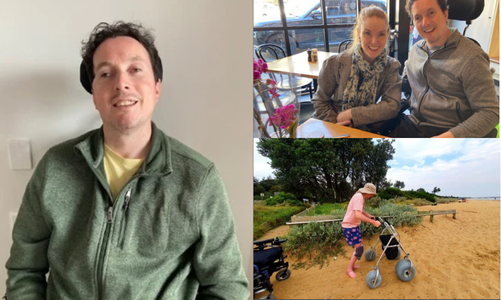
Paul and Caitlin focussed on setting small and achievable goals, starting with upper limp movement and moving on to simple tasks like brushing his teeth. Through consistent therapy and determination, Paul has gradually regained his abilities. His speech improved, his strength returned, and step by step, he rebuilt his independence.
Relearning Movement and Strength
Physiotherapy was one of the toughest parts of Paul’s recovery. After his injury, his legs were stiff and unresponsive. Even bending his knees required intense effort and support.
When Paul first attempted to ride an automatic training bike, he was unable to complete a single revolution. With some persistence and the help of his physiotherapist, Paul was able to achieve this milestone. Paul now rides his bike for 20 minutes every day with ease.
“It took everything just to get one movement,” he says. “But we celebrated that one step.”
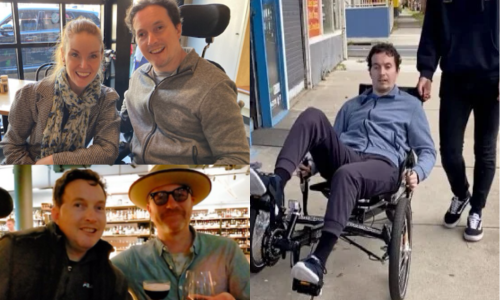
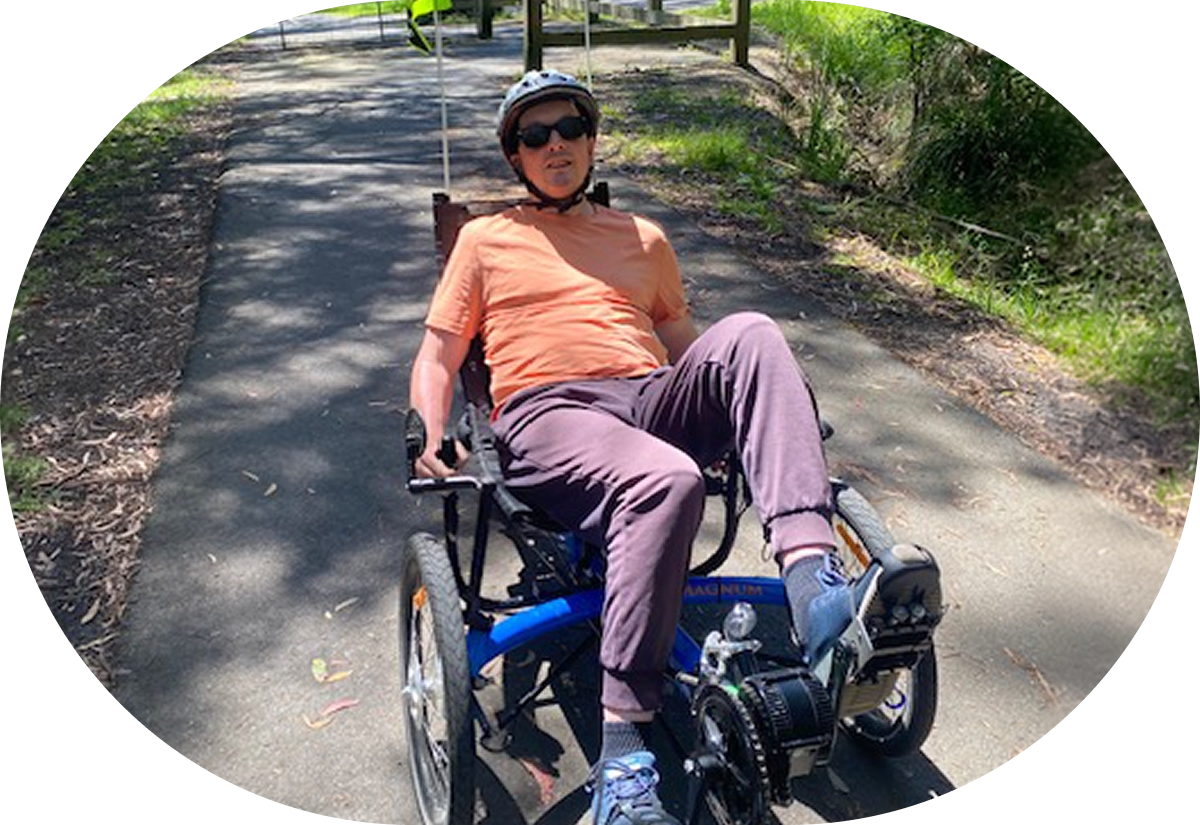
From there, progress continued as Paul was able to stand, take his first steps, ride a three wheeled bike and gradually increase distance and endurance. Eventually, Paul achieved one of his biggest goals, completing a 40km ride along the Warburton Rail Trail.
“It was absolutely beautiful and worth the wait,” he says.
Caitlin often asks Paul, "what would pre-injury Paul do?" Given Paul's cognitive capacity is virtually unchanged, this attitude gives him the drive to adapt with his new physical changes to different activities that make his life meaningful and fun.
Paul achieved the milestone of going to the beach for the first time on a beautiful sunny day in St Kilda with Caitlin and his partner Adam, trialling his beach walker and hopping into the water in a water wheelchair. The opportunity to experience the sand and the water with his supporters by his side was worth the physical effort.
“It took everything just to get one movement,” he says. “But we celebrated that one step.”
Paul Jamieson
Rebuilding Independence
Recovery for Paul wasn’t just physical — it was about rebuilding a life. He began volunteering, gaining confidence and developing new skills. He later completed a medical administration course, working towards employment in a helping profession.
Another major milestone was moving into his own home. This independence didn’t come easily, it was built step by step, with guidance, structure, and determination.
“Living independently has been incredible,” Paul says. “I have my privacy, my comfort, and support when I need it.”
Paul credits his recovery to the people around him. From his family, who stood by him every day, to support workers and rehabilitation staff who provided care, encouragement, and belief, each played a critical role.
“The support I received made all the difference,” he says. “It gave me the chance to keep going.”
A Message of Hope
Today, Paul continues to set new goals and push forward. While he still uses a walking frame, his progress is undeniable, from being unable to move or communicate, to living independently, working towards employment, and achieving personal milestones. Paul has immense gratitude for the life that he leads today.
Paul’s story shows us that recovery from brain injury, even with the most uncertain of outlooks, is possible. Progress isn’t always linear and sometimes even small milestones can be significant. This is where family and support networks are critical to enabling progressive recovery and a positive state of mind. With this support, independence can be built over time, leading to a rich and fulfilling life.
He has a simple but powerful message for others.
“Remain hopeful. Be determined. With the right support, you can get better. I’m proof of that.”
Paul Jamieson
Brain Injury Awareness Week 2026
Paul’s long ride for brain injury
Support Paul’s 50km Yarra Trail ride and help give people living with brain injury a voice.
Paul speaks at a recent BrainLink Community Forum event
Listen to Paul's Story
Paul recently sat down with podcast host Di Conners to talk through his resilience, tenacity and unwavering positivity. With interviews with therapists and loved ones. This is Paul's recovery story through his eyes.