Marcus' Story | Turning Pain into Purpose
October 30, 2025
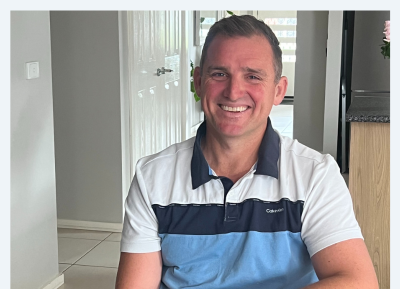
At BrainLink, we believe that every story of brain injury is more than a diagnosis. Recently, the BrainLink team were fortunate to sit down with Marcus Whelan who shared his incredible life-changing journey with us. These stories not only highlight the impact of brain injury on the person and their support network, but also inspire the broader community on their unique path.
A Day on the Water That Changed Everything
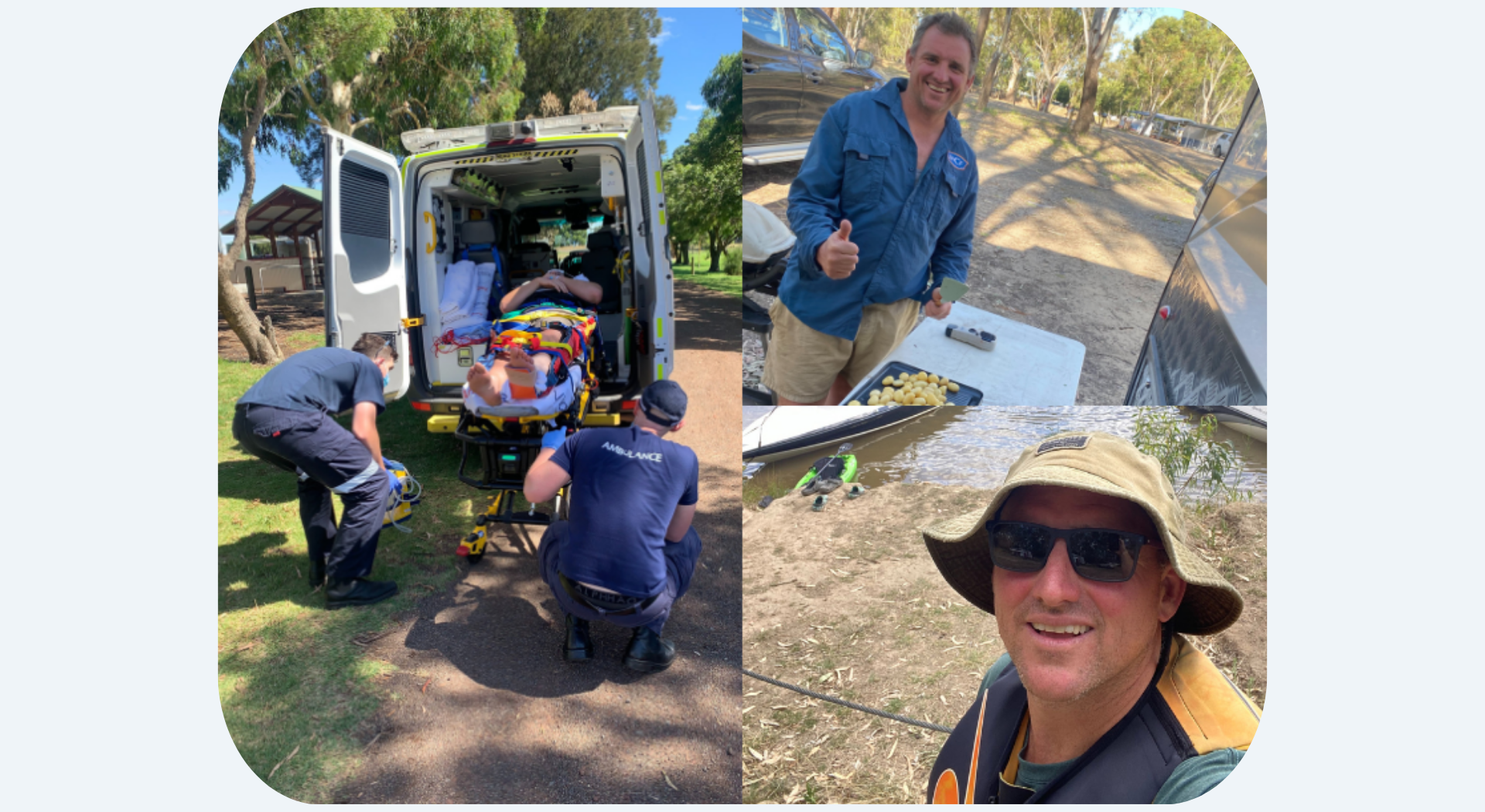
It was January 2021, and Marcus and his family had spent an amazing summer water-skiing, their favourite past time. On the final day of the month, they planned one last day trip with good friends at Lake Bullen Merri, in Camperdown.
As committed water skiers, Marcus and friends had planned an early start, hitting the road at 5:30 am for the three-hour drive. They made good progress, but on arrival found that the lake was closed, having fallen victim to blue green algae.
Undeterred, they hatched a new plan and headed for Colac, only to find that the water was too shallow for ski boats.
Some friendly locals suggested they try Derrinallum, so off they set for another hours’ drive. This time, they were rewarded with a beautiful lake in the middle of nowhere. Finally, they could hit the water. Marcus and the crew got the boats in and then…unbelievably the boat wouldn’t start. As you can see, it was a day where everything was going wrong. The worst was still to come.
Marcus' mate took the first ski and commented that the water felt slippery, which is not a normal sensation when you are water skiing. Marcus went next eager to feel the wind on his face and the water beneath his feet. Three turns in and, bang, Marcus slipped – it was that kind of day. Marcus' head went one way, and his legs went the other. He knew straight away he’d broken his leg and ankle. The crew managed to get Marcus into the boat and deliver him safely back to shore where Megan, Marcus’ wife, called an ambulance.
The paramedics arrived about an hour later and with green whistle in hand, carted Marcus and Megan off on the two-hour ride to hospital. Despite Marcus’ pain, the mood remained light-hearted, they were already thinking of the story they were going to tell family and friends back home. Megan took photos, ready to show Marcus’ parents when they returned home.
At the hospital, X-rays confirmed that Marcus had broken three bones. Knowing that Marcus had been skiing at high speed and out of an abundance of caution, the ED doctor did a CT scan with contrast, just to be safe. That decision - that scan, changed their lives forever.
When the results were in, the doctor sat on the end of Marcus’ bed and started to deliver the life-changing news “I don’t know how to tell you this…”
In Marcus’ own words, he said he was lying there thinking “mate, how bad can a broken ankle be? Four bones? Five?” The doctor then said something no one expected. “We have found a growth on your brain. We strongly believe it’s cancer.”
Marcus laughed, thinking the doctor was joking and told him he must have been in the wrong room. “I’m here for a broken leg,” Marcus said. Persistently, the doctor confirmed he had the right room and, ironically, that was the moment everything started going right.
From Broken Bones to Brain Surgery
Within days, Marcus met the neurosurgeon who would soon become one of the most important people in his life. Marcus told him straight up, “Don’t sugar-coat it," and he didn’t. Not once, which helped build a strong bond of mutual respect.
The tumour was in the speech centre of Marcus’ brain, right next to the motor cortex that controls the right side of his body. "As a dad of three and a guy who enjoys a yarn, the idea of not being able to talk or understand my kids…well, that rattled me," Marcus said.
Megan reminded the neurosurgeon that Marcus wasn’t just a patient number, he was a husband, dad, son, brother and friend as well. The doctor promised to do everything in his power to keep the damage minimal, but made no guarantees.
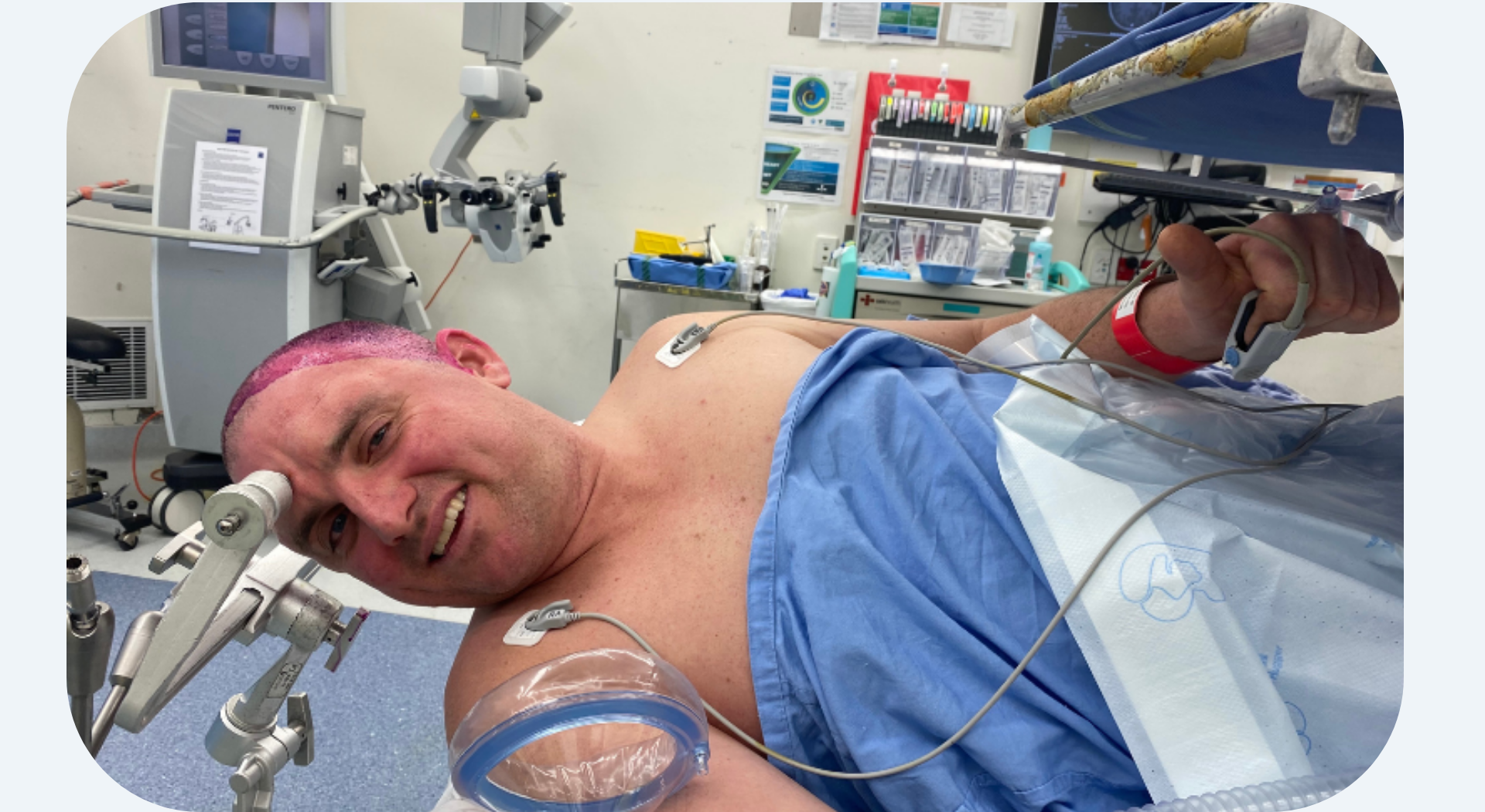
Marcus was terrified leading up to the first craniotomy, which involved him lying fully awake and head pinned while the surgical team cut open his skull and investigated his brain.Marcus focussed his thoughts on his wife and beautiful family – it was all he could do to get through the experience.
Eight hours later, Marcus woke up in ICU alone – COVID lockdowns meant family and friends were not permitted to visit him.He couldn’t talk and had no means of communicating with the nursing staff – it was an isolating and traumatic experience.
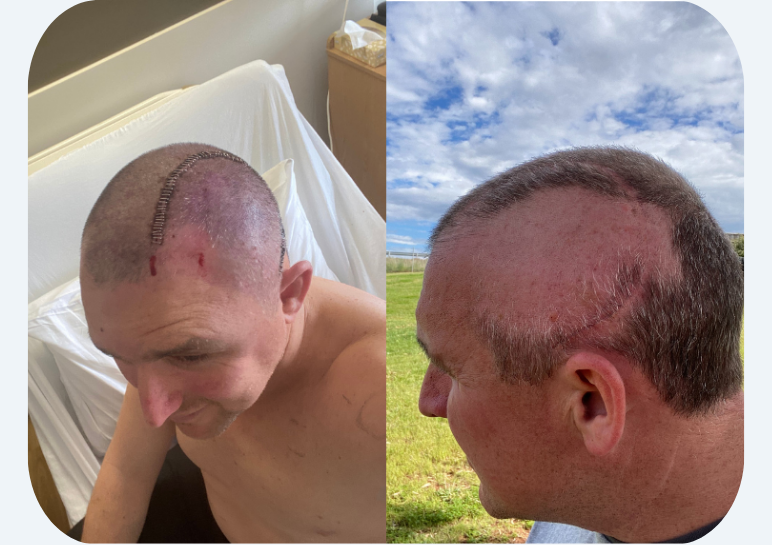
The days and weeks that followed were grim, but taking it one day at a time, Marcus’ faculties slowly returned and after many months, he was able to return to work in a reduced capacity.
The Rollercoaster Ahead
In August 2022, Marcus had a massive seizure in his sleep. MRI results showed that the tumour had grown which meant another craniotomy awake.
This time, surgery did not go well – Marcus suffered a massive seizure in theatre, while still awake and with his head pinned. His surgical team stepped back and allowed him to recover before they continued. It was a traumatic experience that has since left its own scars.
After about an hour, the team recommenced surgery, but it didn’t take long for Marcus’ neurosurgeon to realise that surgical intervention would no longer be an option. The brain tumour was inoperable, and Marcus’ cancer was now deemed terminal.
What followed was a whirlwind of scans, treatments and a new word added to the vocabulary — scanxiety — that gut-twisting feeling before every three-month scan. Because with brain cancer, it only takes one bad scan to change everything.
Finding Purpose in the Pain
Being referred to the Peter MacCallum Cancer Centre significantly changed things for Marcus. Sitting in the waiting room, he suddenly felt like a real cancer patient. As the youngest adult by decades, it was heartbreaking to see children doing it tougher than him. It hit Marcus hard.
Marcus recalls one occasion where he saw a little girl do cartwheels after she completed her final radiation session and thought to himself, "If she can find joy on her worst days, I bloody well can too”. This became his mantra.
During radiation, Marcus' mates stepped up to help drive him the 120km round trip into Melbourne for his treatment. In order to provide levity to these turbulent days, Marcus started filming carpool karaoke with his drivers and posting it on his social media. While not as enjoyable as his beloved water-skiing, it became the distraction he needed and a point of conversation for others who didn’t know what to say. It helped normalise Marcus’ treatment as much for others, as it did himself.
Two days before finishing his radiation treatment, Marcus experienced another massive seizure, this time in front of his own parents and his children. An experience that was confronting for everyone.
Marcus stopped breathing and was sent by ambulance to hospital where he spent ten days experiencing non-stop seizures. "Terrifying doesn’t cut it,” he says. “I felt trapped in a body that wasn’t mine anymore."
The Climb Back
After radiation, in 2023 Marcus underwent a full year of brutal chemotherapy which resulted in severe nausea, fatigue and internal bleeding.
On more than one occasion, the symptoms were so harsh that Marcus thought about stopping his treatment all together. With the help and unwavering support from his family, he was able to push through. "Over the last four years, I’ve learned more about myself than I ever thought possible,” Marcus says poignantly. Some of his insights include:
- Even a laid-back person like me can get anxiety.
- Crying doesn’t make you weak.
- Meditation isn’t just for monks.
- Mental health is just as important as physical.
- There’s always something to be grateful for — you just have to squint sometimes.
"I also learned that no matter how crook you are — you’re never out of the fight." Marcus said.
Marcus' New Mission
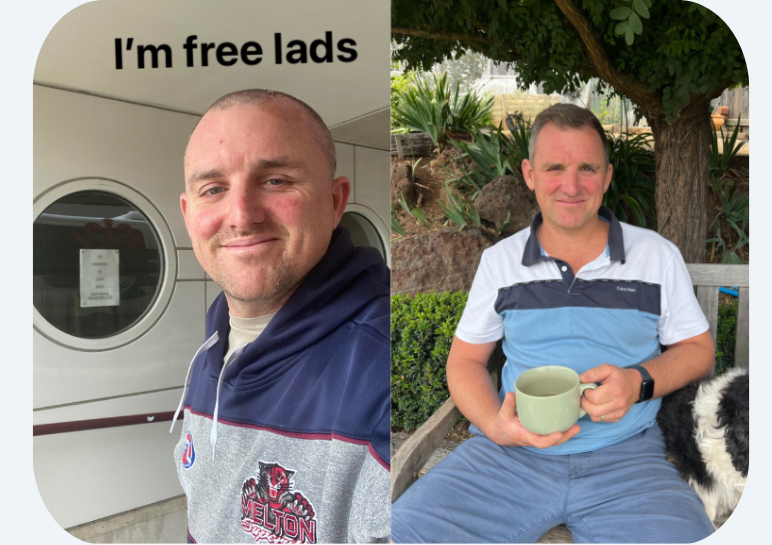
Living with brain cancer in Bacchus Marsh, Marcus felt isolated and disconnected, so he started up the Bacchus Marsh Yarning Circle, a support group for locals who are, or have walked their own cancer path, to have a yarn over coffee.
“The one thing I wish I had, was someone who’d been through a similar journey. Someone who understood the frustration of knowing exactly what you want to say. but physically not being able to say it. Someone who could listen. Who wouldn’t rush me. Who could give real, lived advice — not from a textbook, but from their own experience." Marcus said.
And that’s how Mentoring Minds was born.
Marcus' purpose is to help others who are going through cancer or recovery feel seen, heard, supported and understood. Marcus is passionate about walking beside people as they work out what their “new normal” looks like.
- Setting small goals — like walking that favourite beach again.
- Learning to speak with confidence after surgery.
- Returning to work in any capacity, just to feel useful again.
- Or just having a safe space to cry, vent, or laugh.
“This business is my legacy. Something I can build and grow, while I am still here and able”.
“Having walked the path myself, I know I’m best placed to support and advocate for others who find themselves going through a similar experience” Marcus concludes.
Real Talk. Real Support. Real Life
Mentoring Minds provides personalised, one-on-one support to help you build skills, set goals, and move forward with confidence. Marcus supports all people facing challenges related to brain injury, including difficulties with focus, motivation, anxiety, or finding their path. People recovering from serious illness or injury, who want to rebuild confidence, re-enter the workforce, or take positive steps in life again.